Signed in as:
filler@godaddy.com
Signed in as:
filler@godaddy.com

Structured, peer-supported, abstinence-based recovery housing for adults ready to practice sobriety, accountability, recovery participation, and independent-living skills.
From inception, SoberHomes was designed to help increase the quality and quantity of recovery residences in the Western states. Our model uses NARR, HUD, and SAMHSA recovery-housing best practices as its foundation while remaining independent, non-clinical, peer-supported housing — not detox, rehab, residential treatment, therapy, psychiatric care, emergency shelter, probation supervision, or 24-hour clinical care.
Call: (775) 717-0117
Email: referral@welvida.com
SoberHomes may be appropriate for adults who:
Some people may need a higher level of care before sober living if they have:

Plain-English guide to SoberHomes rules, peer leadership, CTC, House Reset, and daily structure.
Learn how peer leadership, written expectations, house meetings, and Housing Director oversight support accountability.

Common questions about sober living, recovery housing, rules, costs, and referral fit.
Monthly reflection exercise for building recovery habits, accountability, and readiness for safer independent living.
SoberHomes provides:
Sober living may be appropriate after detox, residential treatment, hospitalization, incarceration, unstable housing, or a return-to-use episode when the person is stable enough for shared housing and wants abstinence-based structure. or a return-to-use episode when the person is stable enough for shared housing and wants abstinence-based structure.
SoberHomes can help bridge the gap between intensive services and independent living by providing daily structure, peer accountability, house participation, and a recovery-supportive living environment.
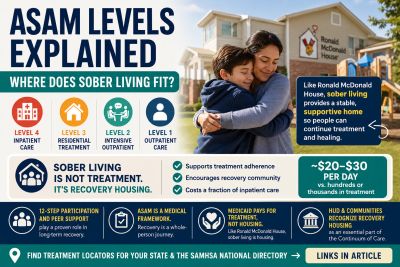
SoberHomes is not a substitute for treatment; it supports adherence and follow-through with treatment and recovery plans. Many residents benefit from combining sober living with outside outpatient treatment, IOP, medication management, counseling, mutual aid, employment support, or case management.
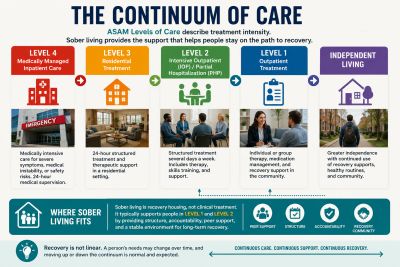
Sober living can complement IOP, outpatient treatment, MAT through outside providers, counseling, peer support, recovery meetings, employment, school, or other structured activities.
SoberHomes does not provide IOP or clinical treatment directly. The outside provider delivers clinical care. SoberHomes provides the independent, non-clinical sober living environment.
SoberHomes is exploring referral coordination with local outpatient and IOP providers so appropriate residents can combine independent sober living with outside clinical services. This may be useful for behavioral-health, diversion court, and reentry referrals when the person is appropriate for both sober living and outpatient care.
For SoberHomes, low-barrier means the first referral step should be simple, accessible, and practical for people who want abstinence-based recovery housing and are appropriate for non-clinical shared living.
SoberHomes can be one voluntary option within a broader Housing First-oriented system for people who want sober living. It should not be treated as the only housing pathway for people who do not want abstinence-based housing or who need a different level of care.
SoberHomes still requires:
Please reach us at referral@welvida.com if you cannot find an answer to your question.
Related article/page: What Is Recovery Housing?
Sober living, also called recovery housing or a recovery residence, is a substance-free living environment that supports people in recovery through structure, peer accountability, house rules, and recovery participation. It is housing, not clinical treatment.
What the linked resource provides: The article explains the basic recovery-housing model, how recovery residences differ from informal room rentals, and why structure and shared recovery expectations matter for residents, families, and referral partners.
Related article/page: What Is an SLE, SLH, THU, or Recovery Residence?
These are different terms used around the country by different systems to refer to supportive housing models. The terms may vary by state, funding system, court program, treatment provider, or recovery-housing organization.
What the linked resource provides: The article explains common recovery-housing terms so families, residents, and referral partners can understand what each housing label usually means.
Related article/page: Recovery Housing Is Not Treatment
No. SoberHomes is non-clinical sober living. It does not provide detox, residential treatment, therapy, psychiatric care, medical care, or 24-hour clinical supervision. Residents use outside providers for clinical care, medication, IOP, outpatient services, and case management.
What the linked resource provides: The article explains why recovery housing can support treatment adherence and recovery routines without becoming a treatment provider. This distinction matters for discharge planning, risk screening, and ethical referral language.
Related article/page: Sober Living With IOP: How Recovery Housing and Outpatient Treatment Can Work Together — Coming Soon
Yes. Sober living can complement IOP, outpatient treatment, counseling, medication management through outside providers, peer support, recovery meetings, employment, school, and other structured activities. SoberHomes does not provide IOP directly.
What the linked resource provides: Coming soon: this article should explain how outside treatment, peer support, medication management, and structured sober living can work together while remaining separate services. This is especially useful for case managers coordinating outpatient care with sober living.
Related article/page: What Are ASAM Levels of Care, and Where Does Sober Living Fit?
Sober living is not an ASAM clinical treatment level. It is a recovery-housing environment that can support people before, during, or after outpatient treatment, IOP, PHP, residential treatment, or other clinical services.
What the linked resource provides: The article helps case managers explain that sober living can operate alongside clinical care while remaining non-clinical housing. This is important when referral partners are comparing outpatient, IOP, residential treatment, and recovery housing.
Related article/page: What Are ASAM Levels of Care, and Where Does Sober Living Fit?
Sober living is not an ASAM clinical treatment level. It is a recovery-housing environment that can support people before, during, or after outpatient treatment, IOP, PHP, residential treatment, or other clinical services.
What the linked resource provides: The article helps case managers explain that sober living can operate alongside clinical care while remaining non-clinical housing. This is important when referral partners are comparing outpatient, IOP, residential treatment, and recovery housing.
Related article/page: The Follow-Through Gap in Outpatient Behavioral Health
Many people leave treatment, outpatient care, court, hospitals, shelters, crisis services, or family interventions with a plan but return to environments that do not support daily follow-through. Sober living can help close that gap by adding routine, accountability, peer support, house expectations, and a recovery-oriented living environment.
What the linked resource provides: The page explains why insight and education are not enough by themselves. It frames recovery housing, peer support, and digital tools as practical adherence infrastructure that helps people practice behavioral-health plans between appointments.
Related article/page: Why Adherence Matters in Addiction Recovery
Adherence means follow-through. In addiction recovery and behavioral health, it includes attending appointments, participating in recovery meetings, taking medications as prescribed by outside providers, maintaining routines, communicating with support people, and asking for help before problems become crises.
What the linked resource provides: The article frames adherence as a public-health challenge: people need systems that support follow-through, not just advice.
Related article/page: Is Sober Living Compatible With Housing First? — Coming Soon
SoberHomes is abstinence-focused sober living, so it should be voluntary and appropriate for people who want that model. It can be one recovery-housing option within a broader Housing First-oriented system, but it should not be the only option for people who do not want abstinence-based housing or who need another level of care.
What the linked resource provides: Coming soon: this article should address recovery housing, participant choice, abstinence-based housing, low-barrier access, and how sober living can fit within a broader housing continuum without becoming a mandatory or exclusive pathway.
Related article/page: Low-Barrier Sober Living: What It Means and What It Does Not Mean — Coming Soon
Low-barrier does not mean no rules. It means the first referral step should be simple and accessible for people who want sober living and are appropriate for non-clinical shared housing. Members still need to follow sobriety expectations, curfew, guest policy, house rules, shared responsibilities, and fit review before move-in.
What the linked resource provides: Coming soon: this article should distinguish easy first contact from no expectations, and explain how low-barrier access can coexist with abstinence, safety, peer accountability, and house rules.
Related article/page: When Sober Living Is Not Enough: Signs Someone May Need a Higher Level of Care — Coming Soon
A person may need detox, stabilization, residential treatment, psychiatric care, medical care, crisis services, emergency shelter, or more supervised housing if they are currently intoxicated, in withdrawal, medically or psychiatrically unstable, unsafe in shared housing, or unable to follow basic sober living expectations.
What the linked resource provides: Coming soon: this article should help families, case managers, courts, and reentry partners recognize when sober living may be premature and a higher level of care should be considered first.
Related article/page: Does Sober Living Actually Work?
Research suggests sober living and recovery residences can support abstinence, housing stability, employment, social support, and recovery participation when residents engage with the structure and community. Outcomes vary, and sober living is not a guarantee.
What the linked resource provides: The article reviews what research suggests about sober living, peer support, abstinence, stability, and long-term recovery outcomes.
Related article/page: Contact SoberHomes
Case managers can use the one-minute referral/application form, call or text SoberHomes at (775) 717-0117, or email referral@welvida.com. The first step is not a full intake; it is a fit and availability conversation.
What the linked resource provides: The contact page provides the one-minute form, phone number, referral email, and links to sample documents and location pages.
We use cookies and analytics tools to understand website traffic and improve Welvida/SoberHomes content and referral pathways. You can accept or manage your cookie preferences.