(775) 717-0117

(775) 717-0117

  • Home
  • SoberHomes
  • Locations
    • Reno Sober Living
    • Sparks Sober Living
  • Sober Living FAQ
  • Member Guides
    • For Prospective Members
    • Rules Explained
    • Sample Documents
  • Referral Partners
    • For Case Managers
    • Courts and Reentry
  • Recovery Tools
    • SoberPals App
  • Blog
  • Contact Us
  • More
    • Home
    • SoberHomes
    • Locations
      • Reno Sober Living
      • Sparks Sober Living
    • Sober Living FAQ
    • Member Guides
      • For Prospective Members
      • Rules Explained
      • Sample Documents
    • Referral Partners
      • For Case Managers
      • Courts and Reentry
    • Recovery Tools
      • SoberPals App
    • Blog
    • Contact Us
  • Sign In
  • Create Account

  • My Account
  • Signed in as:

  • filler@godaddy.com


  • My Account
  • Sign out

Signed in as:

filler@godaddy.com

  • Home
  • SoberHomes
  • Locations
    • Reno Sober Living
    • Sparks Sober Living
  • Sober Living FAQ
  • Member Guides
    • For Prospective Members
    • Rules Explained
    • Sample Documents
  • Referral Partners
    • For Case Managers
    • Courts and Reentry
  • Recovery Tools
    • SoberPals App
  • Blog
  • Contact Us

Account


  • My Account
  • Sign out


  • Sign In
  • My Account
new.welvida.com

Sober Living for Courts, Diversion and Reentry Partners

Sober Living Referrals for Courts, Reentry, and Diversion Partners


Structured, non-clinical sober living in Reno and Sparks for motivated, stabilized adults ready for abstinence, accountability, recovery participation, and respectful co-living.


SoberHomes provides structured, non-clinical sober living for motivated, stabilized justice-involved adults who are appropriate for abstinence-based recovery housing and outpatient follow-through, including IOP, therapy, MAT through outside providers, 12-step recovery, wraparound services, and respectful co-living.


SoberHomes is not residential treatment, detox, therapy, psychiatric care, emergency shelter, or 24-hour clinical supervision.


Call: (775) 717-0117

Email: referral@welvida.com


Housing Director: (775) 717-0113

Refer or Apply — 1 Minute FormCall Housing Director About FitReview Sample DocumentsRules ExplainedDownload Reentry Handout

Quick Answers for Court Partners

Please reach us at referral@welvida.com if you cannot find an answer to your question.


The first referral step is simple, but SoberHomes is not no-rules housing; acceptance depends on fit, motivation, abstinence goals, shared-housing safety, and agreement to house expectations.

 SoberHomes requires members to provide a specimen upon request as a condition of housing. Testing may include random urine testing, roughly twice weekly, and daily breathalyzer testing. Higher-risk situations may require daily testing, including after a relapse, suspected return to use, or daily house-wide UA testing during a 'house reset'– 10 days of increased accountability to prevent destabilization eg Christmas holiday.


 Standard curfew is 9:30 p.m. Sunday through Thursday and 10:30 p.m. Friday and Saturday. Exceptions or accommodations may be approved for work, treatment, meetings, court obligations, family responsibilities, and other healthy activities.


SoberHomes is non-clinical recovery housing, not treatment. Some members benefit from additional outpatient support such as IOP, therapy, medication-assisted treatment, psychiatric care, or case management.


When appropriate, SoberHomes may encourage members to explore IOP while continuing to live in structured sober housing. This can be helpful after detox or residential treatment, after relapse, during mental health stabilization, or when a member needs more structure while working or rebuilding daily routines.


Members may choose any appropriate provider. SoberHomes has previously worked with or referred members to Reno Stronger and American Addiction Centers / Desert Hope online or outpatient options. Reno Stronger is listed in Nevada’s behavioral health directory as offering adult Level 2.1 Intensive Outpatient Services and accepting Medicaid. American Addiction Centers describes outpatient treatment as structured treatment that can allow people to continue work, school, or family responsibilities while receiving care.


Members should confirm current availability, Medicaid acceptance, schedule fit, and clinical appropriateness directly with the provider.


SoberHomes can consider rule exceptions or accommodations for legitimate work schedules, swing shifts, treatment, recovery activities, and other healthy commitments. Accommodations should be discussed before move-in or as soon as the need is known.


Members are generally expected to attend and document five recovery meetings per week, obtain a sponsor or recovery mentor, and work the first six steps or comparable recovery commitments. Accepted meeting pathways may include AA, NA, Recovery Dharma, SMART Recovery, and other appropriate recovery supports.


As a protective measure, SoberHomes may require daily in-person meeting attendance and sponsor confirmation call– new members and members on a formal CTC.


Behavioral or financial violations may result in a Commitment to Correct. During a CTC, members may be required to attend an in-person recovery meeting daily, participate in daily accountability at the house meeting, and complete daily UA testing or other accountability measures.


SoberHomes does not provide food. Members are responsible for groceries, meals, personal supplies, transportation planning, outside treatment, legal obligations, and daily recovery participation.


SoberHomes documents adherence to house rules and responsibilities through daily logs and house processes. Documentation may include meeting participation, house responsibilities, curfew-related issues, behavioral concerns, testing when required by policy, corrective actions, 10-day notices, and immediate-termination issues when applicable.


Who May Be Appropriate for Structured Sober Living

Who SoberHomes May Fit

May need another setting first

May need another setting first

SoberHomes may be appropriate for justice-involved adults who:


  • Are motivated and stabilized
  • Want abstinence-based recovery housing
  • Are medically and psychiatrically stable enough for shared housing
  • Are participating in or willing to participate in IOP, therapy, MAT through outside providers, 12-step recovery, mutual aid, employment, school, volunteering, or wraparound services
  • Can follow written rules, curfew, quiet hours, guest expectations, and testing requirements
  • Can live respectfully with peers in a shared home
  • Understand SoberHomes is not residential treatment, emergency shelter, probation supervision, or 24-hour oversight
  • Would benefit from a recovery culture rather than a weekly motel, unstable housing, or substance-use-heavy environment
  • Are preparing for stable independent living

May need another setting first

May need another setting first

May need another setting first

Some referrals may need another setting first if they involve:


  • Current intoxication or withdrawal risk
  • Need for detox, stabilization, residential treatment, crisis care, locked care, or 24/7 supervision
  • Medical or psychiatric instability
  • Acute safety risk to self or others
  • Serious antisocial, predatory, threatening, violent, or disruptive conduct incompatible with shared sober living
  • Immediate post-release housing without adequate fit review, except carefully screened cases
  • Unwillingness to participate in abstinence, recovery activities, house rules, accountability, or respectful co-living

Call Housing Director About Fit

Direct Release From Custody: Fit Depends on Readiness

SoberHomes does not automatically accept housing referrals directly following release from incarceration. The standard intake process includes a tour and motivation interview to determine whether the prospective member is a fit for the house and whether the house is a fit for the prospective member.


A likely good fit is a non-violent / non-sex-offense referral who has achieved abstinence during incarceration, participated in recovery activities such as AA or other jail-based recovery supports, stabilized, and demonstrated strong motivation for 12-step recovery, accountability, and respectful co-living.


Direct-release referrals are strongest when recovery housing is paired with community-based work, behavioral health support, outpatient treatment, IOP, MAT when appropriate, probation/case-management support, or other wraparound services.


SoberHomes may not be the right first step for individuals who lack motivation, remain unstable, or need a higher level of professional oversight. In those situations, Step 1, a residential treatment center, detox/stabilization, crisis services, or another clinically supervised setting may be more appropriate before sober living.


For possible direct-release referrals, case managers or justice partners should call the Housing Director before submitting a referral to discuss fit, timing, documentation, motivation, risk factors, and process.

A Recovery Culture Instead of a Substance-Use Environment

For some justice-involved adults, the practical alternative to sober living may be a weekly motel, couch-surfing, unstable housing, or returning to an environment where substance use is common. These settings can undermine outpatient treatment, court participation, employment, medication adherence, recovery meetings, and daily follow-through.


SoberHomes offers a structured recovery-housing environment where residents are expected to practice abstinence, accountability, peer support, shared responsibility, curfew, recovery participation, and movement toward independent living.


The poster below summarizes this difference. It shows how recovery-capital activities—community, routine, accountability, 12-step participation and support, and respectful conflict resolution—can reduce exposure to criminogenic-risk factors such as high-risk peer networks, secrecy, impulsivity, instability, and substance-use normalization.


SoberHomes is not a substitute for treatment or supervision. It is an adherence-supportive housing environment for people who are appropriate for non-clinical sober living.

Recovery Capital and Criminogenic-Risk Exposure

Download the 11×17 Poster

This 11×17 poster  was designed for probation, diversion, reentry, and court-adjacent referral settings. It shows how structured, non-clinical recovery housing can support daily participation while reducing exposure to high-risk people, places, patterns, and behaviors.

Download 11×17 Poster

Printable Jail and Reentry Handout

Download or print the Coming Home Sober handout.


SoberHomes created a one-page Coming Home Sober handout for people leaving jail, reentry staff, probation/parole teams, diversion courts, case managers, treatment providers, and family members.

The handout helps people quickly understand whether structured sober living may be a good fit after release. It explains that SoberHomes is peer-supported, abstinence-based, non-clinical recovery housing — not detox, rehab, probation supervision, emergency shelter, motel housing, or cheap rent without expectations.

Use this handout to help identify people who are motivated for sober living, able to live respectfully in shared housing, willing to follow written rules, and ready to participate in recovery, work, service, and community.

Download Reentry Handout

Sober Living With IOP, Therapy, MAT, 12-Step Recovery, and Wraparound Services

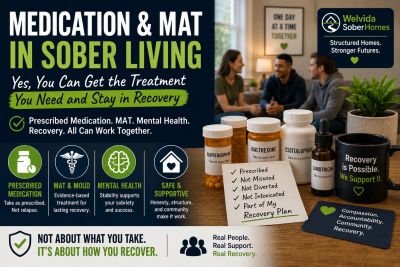
Many diversion court and specialty court participants do not need residential treatment but still need more structure than unsupported housing. Sober living can complement IOP, outpatient treatment, therapy, MAT through outside providers, 12-step participation, peer support, employment, school, and wraparound services.


SoberHomes does not provide IOP, therapy, MAT, or clinical treatment directly. Outside providers deliver clinical care and wraparound services. SoberHomes provides the independent, non-clinical sober living environment that supports daily follow-through.


This distinction is important for justice referrals: treatment, supervision, and court accountability remain outside services; SoberHomes provides structured recovery housing.
EVIDENCE-INFORMED RATIONALE FOR RECOVERY HOUSING

Recovery housing supports follow-through.

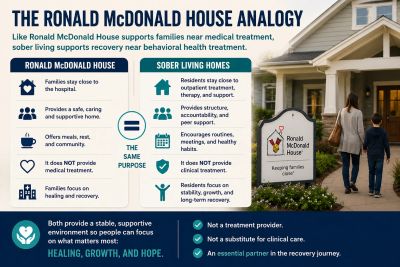
Student housing does not teach the classes, but it helps students stay close to school, peers, schedules, and expectations. Ronald McDonald House does not provide hospital treatment, but it helps families stay near care.


Sober living works in a similar way: outside providers deliver treatment and wraparound services, while SoberHomes provides a structured recovery environment where residents can practice showing up, following rules, attending meetings, participating in outpatient care, working, and preparing for independent living.


For courts and reentry partners, the value is practical: a motivated, stabilized participant may be more likely to follow through with recovery meetings, outpatient care, employment, and court obligations in a recovery culture than in a weekly motel, couch-surfing situation, or substance-use-heavy environment.


Research on sober living houses, including work by Polcin and colleagues, suggests benefits in substance use, employment, arrests, psychiatric symptoms, and recovery-support participation when residents engage with the structure and recovery community. 


SoberHomes does not guarantee outcomes, but it is designed to provide the kind of daily environment that supports recovery follow-through.

Recovery housing supports follow-through.
Read Recovery Housing and Public-System Coordination

Evidence-Informed Rationale for Recovery Housing

Recovery housing supports follow-through.
Read Recovery Housing and Public-System CoordinationRead the Follow-Through Gap Read Recovery Housing and the Continuum of CareRead ASAM Levels and Sober Living

BEFORE A REFERRAL OR TOUR: LEARN HOW SOBERHOMES WORKS

Infographic explaining why sober living homes have rules, including recovery and sleep protections.

How SoberHomes Works

Plain-English guide to SoberHomes rules, peer leadership, CTC, House Reset, and daily structure.

Read How SoberHomes Works

Who’s in Charge in Sober Living?

 Learn how peer leadership, written expectations, house meetings, and Housing Director oversight support accountability.

Watch Leadership Video

Sober Living FAQ

Common questions about sober living, recovery housing, rules, costs, and referral fit.

View Sober Living FAQ

Preparing for Independent Living

 Monthly reflection exercise for building recovery habits, accountability, and readiness for safer independent living.

Watch Monthly Exercise

Sample Document Library

Review key documents before applying or referring.
Rules & ResponsibilitiesSample Licensing AgreementAdmissions / Intake FormIntake & Acceptance ProcessSoberHomes Daily Recovery & Accountability Request a Tour

WHAT SOBERHOMES PROVIDES — AND DOES NOT PROVIDE

SoberHomes provides structured, peer-supported, abstinence-based recovery housing in Reno and Sparks.

SoberHomes provides structured, peer-supported, abstinence-based recovery housing in Reno and Sparks.

SoberHomes provides structured, peer-supported, abstinence-based recovery housing in Reno and Sparks.

SoberHomes provides:

  • Written rules and responsibilities
  • Curfew, quiet hours, and guest expectations
  • House meetings and peer leadership
  • Accountability around sobriety, participation, and shared responsibilities
  • Drug and alcohol screening when required by house policy
  • Support for outside IOP, outpatient care, recovery meetings, employment, school, and independent-living preparation
  • Communication with outside providers or referral partners when appropriate and authorized

What SoberHomes Does Not Provide

SoberHomes provides structured, peer-supported, abstinence-based recovery housing in Reno and Sparks.

SoberHomes provides structured, peer-supported, abstinence-based recovery housing in Reno and Sparks.

  • SoberHomes does not provide detox, residential treatment, therapy, psychiatric care, medical care, clinical case management, emergency shelter, probation supervision, locked custody, or 24-hour clinical supervision.


  • Residents remain responsible for outside treatment, medications through licensed providers, legal obligations, appointments, transportation planning, financial responsibilities, and daily recovery participation.

Compliment Wraparound Services

Sober Living With IOP, Therapy, MAT, 12-Step Recovery, and Wraparound Services

Sober living can complement IOP, outpatient treatment, MAT through outside providers, counseling, peer support, recovery meetings, employment, school, or other structured activities.


Sober living may function as step-down or parallel support for motivated, stabilized participants who do not need residential treatment but need more structure than unsupported housing.


SoberHomes does not provide IOP or clinical treatment directly. The outside provider delivers clinical care. SoberHomes provides the independent, non-clinical sober living environment.


SoberHomes is exploring referral coordination with local outpatient and IOP providers so appropriate residents can combine independent sober living with outside clinical services. This may be useful for behavioral-health, diversion court, and reentry referrals when the person is appropriate for both sober living and outpatient care.
Justice InfoGraphics: SOBER LIVING, RECOVERY HOUSING, AND REFERRAL FIT

    CASE MANAGER FAQ: SOBER LIVING AND REFERRAL fit

    Please reach us at referral@welvida.com if you cannot find an answer to your question.

    Related article/page: What Is Recovery Housing?


    Sober living, also called recovery housing or a recovery residence, is a substance-free living environment that supports people in recovery through structure, peer accountability, house rules, and recovery participation. It is housing, not clinical treatment.


    What the linked resource provides: The article explains the basic recovery-housing model, how recovery residences differ from informal room rentals, and why structure and shared recovery expectations matter for residents, families, and referral partners.


    Related article/page: What Is an SLE, SLH, THU, or Recovery Residence?


    These are different terms used around the country by different systems to refer to supportive housing models. The terms may vary by state, funding system, court program, treatment provider, or recovery-housing organization.


    What the linked resource provides: The article explains common recovery-housing terms so families, residents, and referral partners can understand what each housing label usually means.


    Related article/page: Recovery Housing Is Not Treatment


    No. SoberHomes is non-clinical sober living. It does not provide detox, residential treatment, therapy, psychiatric care, medical care, or 24-hour clinical supervision. Residents use outside providers for clinical care, medication, IOP, outpatient services, and case management.


    What the linked resource provides: The article explains why recovery housing can support treatment adherence and recovery routines without becoming a treatment provider. This distinction matters for discharge planning, risk screening, and ethical referral language.


    Related article/page: Sober Living With IOP: How Recovery Housing and Outpatient Treatment Can Work Together — Coming Soon


    Yes. Sober living can complement IOP, outpatient treatment, counseling, medication management through outside providers, peer support, recovery meetings, employment, school, and other structured activities. SoberHomes does not provide IOP directly.


    What the linked resource provides: Coming soon: this article should explain how outside treatment, peer support, medication management, and structured sober living can work together while remaining separate services. This is especially useful for case managers coordinating outpatient care with sober living.


    Related article/page: What Are ASAM Levels of Care, and Where Does Sober Living Fit?


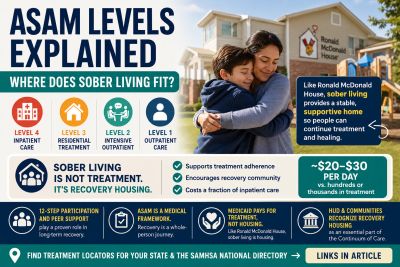
    Sober living is not an ASAM clinical treatment level. It is a recovery-housing environment that can support people before, during, or after outpatient treatment, IOP, PHP, residential treatment, or other clinical services.


    What the linked resource provides: The article helps case managers explain that sober living can operate alongside clinical care while remaining non-clinical housing. This is important when referral partners are comparing outpatient, IOP, residential treatment, and recovery housing.


    Related article/page: What Are ASAM Levels of Care, and Where Does Sober Living Fit?


    Sober living is not an ASAM clinical treatment level. It is a recovery-housing environment that can support people before, during, or after outpatient treatment, IOP, PHP, residential treatment, or other clinical services.


    What the linked resource provides: The article helps case managers explain that sober living can operate alongside clinical care while remaining non-clinical housing. This is important when referral partners are comparing outpatient, IOP, residential treatment, and recovery housing.


    Related article/page: The Follow-Through Gap in Outpatient Behavioral Health


    Many people leave treatment, outpatient care, court, hospitals, shelters, crisis services, or family interventions with a plan but return to environments that do not support daily follow-through. Sober living can help close that gap by adding routine, accountability, peer support, house expectations, and a recovery-oriented living environment.


    What the linked resource provides: The page explains why insight and education are not enough by themselves. It frames recovery housing, peer support, and digital tools as practical adherence infrastructure that helps people practice behavioral-health plans between appointments.


     Related article/page: Why Adherence Matters in Addiction Recovery


    Adherence means follow-through. In addiction recovery and behavioral health, it includes attending appointments, participating in recovery meetings, taking medications as prescribed by outside providers, maintaining routines, communicating with support people, and asking for help before problems become crises.


    What the linked resource provides: The article frames adherence as a public-health challenge: people need systems that support follow-through, not just advice.


    Related article/page: Is Sober Living Compatible With Housing First? — Coming Soon


    SoberHomes is abstinence-focused sober living, so it should be voluntary and appropriate for people who want that model. It can be one recovery-housing option within a broader Housing First-oriented system, but it should not be the only option for people who do not want abstinence-based housing or who need another level of care.


    What the linked resource provides: Coming soon: this article should address recovery housing, participant choice, abstinence-based housing, low-barrier access, and how sober living can fit within a broader housing continuum without becoming a mandatory or exclusive pathway.


    Related article/page: Low-Barrier Sober Living: What It Means and What It Does Not Mean — Coming Soon


    Low-barrier does not mean no rules. It means the first referral step should be simple and accessible for people who want sober living and are appropriate for non-clinical shared housing. Members still need to follow sobriety expectations, curfew, guest policy, house rules, shared responsibilities, and fit review before move-in.


    What the linked resource provides: Coming soon: this article should distinguish easy first contact from no expectations, and explain how low-barrier access can coexist with abstinence, safety, peer accountability, and house rules.


    Related article/page: When Sober Living Is Not Enough: Signs Someone May Need a Higher Level of Care — Coming Soon


    A person may need detox, stabilization, residential treatment, psychiatric care, medical care, crisis services, emergency shelter, or more supervised housing if they are currently intoxicated, in withdrawal, medically or psychiatrically unstable, unsafe in shared housing, or unable to follow basic sober living expectations.


    What the linked resource provides: Coming soon: this article should help families, case managers, courts, and reentry partners recognize when sober living may be premature and a higher level of care should be considered first. 


     Related article/page: Does Sober Living Actually Work?


    Research suggests sober living and recovery residences can support abstinence, housing stability, employment, social support, and recovery participation when residents engage with the structure and community. Outcomes vary, and sober living is not a guarantee.


    What the linked resource provides: The article reviews what research suggests about sober living, peer support, abstinence, stability, and long-term recovery outcomes.


     Related article/page: Contact SoberHomes


    Case managers can use the one-minute referral/application form, call or text SoberHomes at (775) 717-0117, or email referral@welvida.com. The first step is not a full intake; it is a fit and availability conversation.


    What the linked resource provides: The contact page provides the one-minute form, phone number, referral email, and links to sample documents and location pages.


    Refer or Apply — 1 Minute FormReview Sample Documents Contact SoberHomes

    Copyright © 2026 Welvida Care | Sober Living & Recovery Housing - All Rights Reserved.

    Powered by

    • SoberHomes
    • Rules Explained
    • Follow-Through-Gap
    • Welvida Article Library

    This website uses cookies.

    We use cookies and analytics tools to understand website traffic and improve Welvida/SoberHomes content and referral pathways. You can accept or manage your cookie preferences.

    Accept